{{ n.meta }}
{{ n.title }}
{{ para }}
“{{ n.quote }}”
{{ n.quoteBy }}


Reimagining heart health in Pakistan, studying 2,000 asymptomatic adults through advanced imaging, laboratory science and genomics to uncover the hidden drivers of cardiovascular disease and transform preventive healthcare in Pakistan and beyond.
Generating local evidence · Informing better care · Improving lives
{{ gSubtitle }}
PAK-SEHAT is a prospective cohort of 2,000 healthy volunteers with no known cardiovascular risk factors, recruited from eight centres across all four provinces and Islamabad by multistage cluster sampling, provincially representative by population proportion to size.
Every participant completed a baseline questionnaire, blood work, carotid intima-media thickness and coronary CT angiography. A DNA biobank supports whole exome sequencing on 1,550 samples, opening genetic association work on variants specific to South Asian populations.
Together these measurements build the foundation for prevention, early detection and tailored intervention for millions of Pakistanis.
Populations in South Asia as a whole are different, and Pakistanis in particular are unique in genetic make-up, metabolic profile, dietary pattern, lifestyle and environmental exposures. Coronary disease frequently presents at younger ages, and Pakistan carries among the highest burdens of premature cardiovascular disease, yet evidence about coronary plaque in asymptomatic Pakistanis is scarce.
A substantial proportion of apparently healthy participants had hypertension, highlighting the hidden burden of cardiovascular risk in Pakistan.
Advanced coronary imaging revealed a significant burden of subclinical atherosclerosis among adults without known cardiovascular disease.
Most men and women also fell outside the optimal HDL range, revealing a widespread burden of lipid-related cardiovascular risk.
Primary. Prevalence, incidence and severity of subclinical coronary atherosclerosis, stratified by age and gender.
Secondary. Five-year rate of major adverse cardiovascular events.
The same measurement sequence is followed at every centre, from enrolment questionnaire through laboratory work, advanced imaging and long-term outcome ascertainment, so results are directly comparable across provinces and study waves.
Nationwide recruitment across all four provinces and Islamabad, creating the geographic breadth needed to map cardiovascular risk across Pakistan.
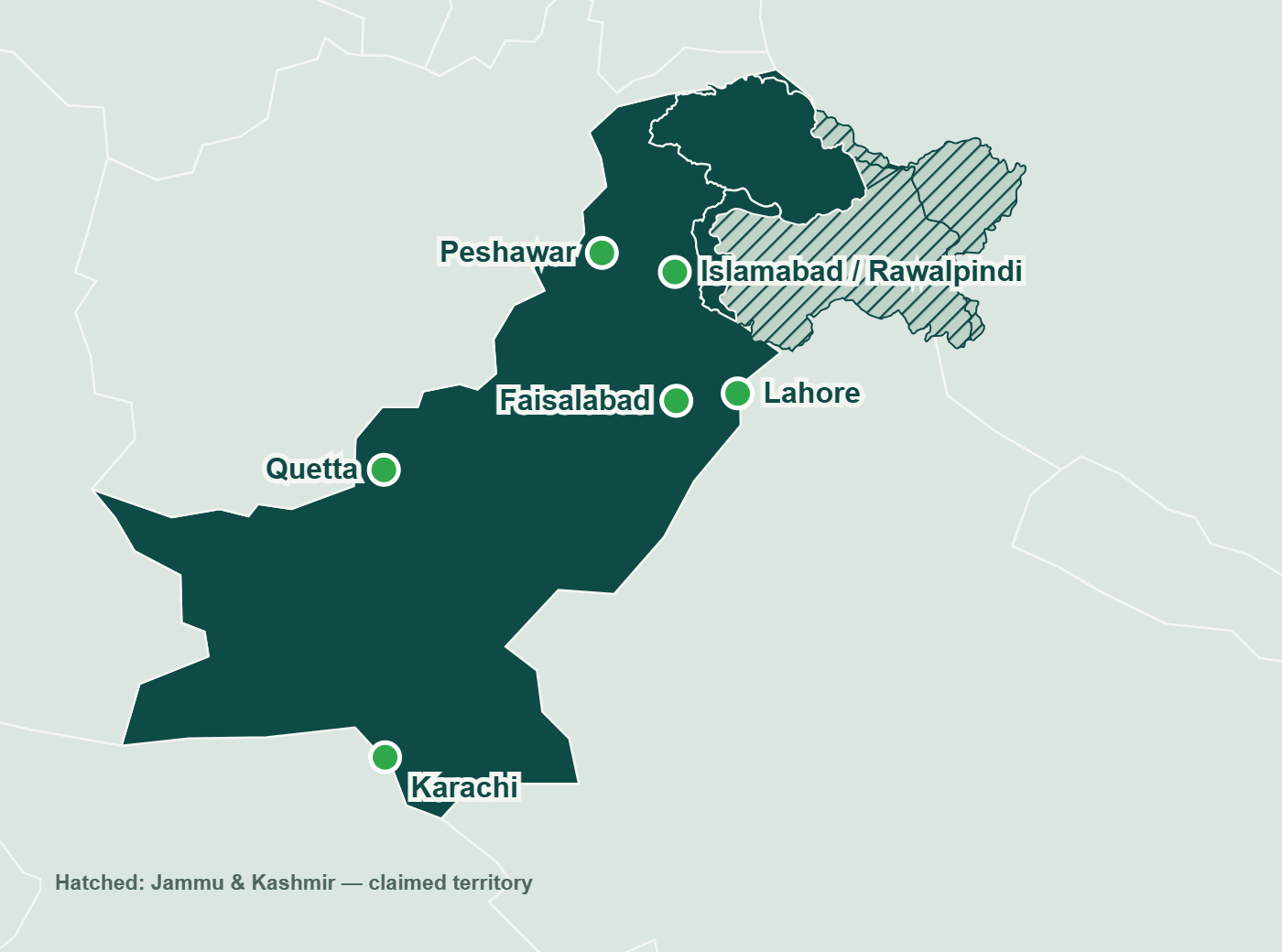
Source: Distribution of Traditional Cardiovascular Risk
Explore the evidence →Preventing and controlling chronic disease helps people to live longer and healthier lives.
There is high-quality evidence that prevention of chronic disease is effective and cost-effective, and that these impacts can be influential at a population level.
Preventing chronic disease helps people to lead their best possible life, all through their life. It avoids strain on the health budget and communities, and increases equity for populations who experience higher levels of chronic disease.